After Ruining a Treasured Water Resource, Iran Is Drying Up (Fred Pearce, Yale E360)

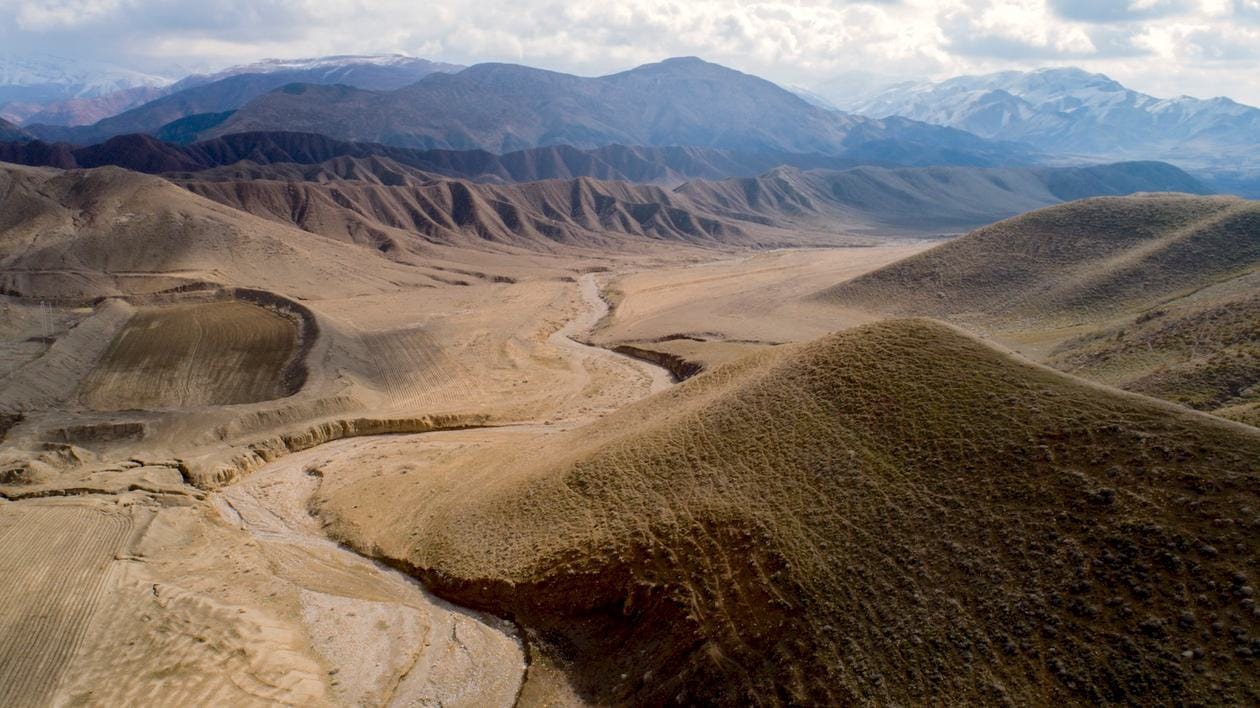
More than international sanctions, more than its stifling theocracy, more than recent bombardment by Israel and the U.S. — Iran’s greatest current existential crisis is what hydrologists are calling its rapidly approaching “water bankruptcy.”
It is a crisis that has a sad origin, they say: the destruction and abandonment of tens of thousands of ancient tunnels for sustainably tapping underground water, known as qanats, that were once the envy of the arid world. But calls for the Iranian government to restore qanats and recharge the underground water reserves that once sustained them are falling on deaf ears.
After a fifth year of extreme drought, Iran’s long-running water crisis reached unprecedented levels in November. The country’s president, Masoud Pezeshkian, warned that Iran had “no choice” but to move its capital away from arid Tehran, which now has a population of about 10 million, to wetter coastal regions — a project that would take decades and has a price estimated by analysts at potentially $100 billion.
While failed rains may be the immediate cause of the crisis, hydrologists say, the root cause is more than half a century of often foolhardy modern water engineering — extending back to before the country’s Islamic revolution of 1979, but accelerated by the Ayatollahs’ policies since. (…)
This is a tragic turnaround for an arid country with a proud tradition of sophisticated management of its meager water resources. Iran is the origin and cultural and engineering heartland of ancient water-collecting systems known as qanats.
Qanats are gently sloping tunnels dug into hillsides in riverless regions to tap underground water, allowing it to flow out into valleys using gravity alone. They have long sustained the country’s farmers, as well as being until recently the main source of water for cities such as Tehran, Yazd, and Isfahan. But today only one in seven fields are irrigated by the tunnels.
Iran has an estimated 70,000 of these structures, most of which are more than 2,500 years old. Their aggregate length has been put at more than 250,000 miles. The Gonabad qanat network, reputedly the world’s largest, extends for more than 20 miles beneath the Barakuh Mountains of northeast Iran. The tunnels are more than 3 feet high, reach a depth of a thousand feet, and are supplied by more than 400 vertical wells for maintenance.
Unlike pumped wells, qanats are an inherently sustainable source of water. They can only take as much water as is replenished by the rain. Yet such has been their durability that they were often called “everlasting springs.” (…)
Besides overpumping, a second reason why Iran’s underground water reserves are slipping away is that less water is seeping down from surface water bodies and soils to replenish them. (…)
The loss of (…) ecological jewels makes a mockery of Iran’s status as the host of the 1971 treaty to protect internationally important wetlands, named after Ramsar, the Iranian city where it was signed. (…)
Hydrologists warn that much of the damage to aquifers is permanent. As they dry out, their water-holding pores collapse. As qanats dry up, they too cave in. (…) Geologists call it a “silent earthquake.” But, while surface structures can be repaired, the geological wreckage underground cannot.
 Fred Pearce
https://news.ycombinator.com/item?id=46310976
Read more:
- about the Ramsar convention to preserve wetlands https://en.wikipedia.org/wiki/Ramsar_Convention
- about whether pumping the aquifer for agriculture is a good idea or not, as currently debated in France https://www.techniques-ingenieur.fr/actualite/articles/megabassines-une-solution-controversee-pour-la-gestion-de-leau-en-agriculture-137056/